

Sleep health is one of the most important parts of overall wellness, yet many people overlook it. While healthy eating and regular exercise often get the most attention, quality sleep plays an equally important role in supporting both physical and mental well-being. In fact, good sleep can help you feel more energized, focused, and prepared for the day ahead.
In this guide, you’ll learn what sleep health means, why it matters, what affects your sleep quality, and practical ways to improve it naturally.
What Is Sleep Health?
Sleep health refers to the overall quality, consistency, and effectiveness of your sleep. It is not just about how many hours you spend in bed. Instead, it focuses on whether your sleep helps you feel rested, alert, and ready to function during the day.
Think of sleep health like nutrition. Just as eating enough food does not always mean eating well, spending enough time in bed does not always mean getting healthy sleep.
In other words, healthy sleep helps you feel rested at night and function well during the day.
Healthy sleep is about more than simply getting enough hours each night. Before exploring the key components of sleep health, it can be helpful to evaluate your current sleep habits.
Quick Sleep Health Check
Take a moment to ask yourself these simple questions:
- Do I wake up feeling refreshed most days?
- Do I stay alert throughout the day?
- Do I maintain a consistent sleep schedule?
- Do I fall asleep within a reasonable time?
- Do I sleep through the night most of the time?
If you answered “no” to several of these questions, your sleep habits may need some attention.
The Key Components of Healthy Sleep
Several factors work together to support healthy sleep.
Sleep Duration
Getting enough sleep gives your body and mind time to recover. According to the U.S. Centers for Disease Control and Prevention (CDC), adults generally need at least 7 hours of sleep per night for good health.
Sleep Quality
In addition, quality matters just as much as quantity. Getting eight hours of sleep is less helpful if it’s frequently interrupted.
Consistency
Likewise, going to bed and waking up at similar times each day helps your body’s internal clock work more effectively.
Daytime Alertness
Finally, one of the easiest ways to judge your sleep is by how you feel during the day. Healthy sleep should help you stay focused and energized without relying heavily on caffeine.
Why Good Sleep Is Important
The importance of sleep goes far beyond simply feeling less tired. Sleep affects many parts of everyday life.
Good sleep can help support:
- Steady energy levels throughout the day
- Better mood and emotional balance
- Improved focus and concentration
- Stronger daily performance at work, school, or home
- Overall physical and mental wellness
For example, think about how you feel after a poor night’s sleep. Simple tasks may feel harder, your patience may be lower, and your focus may suffer. On the other hand, quality sleep often helps you feel more productive and positive.
Sleep experts consistently recognize healthy sleep as one of the key pillars of wellness, alongside nutrition and physical activity.
What Affects Sleep Quality?
Many people assume a single issue causes sleep problems. In reality, sleep is influenced by a combination of habits, routines, environment, and daily stressors.
Understanding what affects sleep quality can help you identify areas where small improvements may make a noticeable difference.
Signs of Good vs Poor Sleep Health
One of the easiest ways to understand your current sleep health is to compare how you feel during the day and night. The compraison below highlights some common signs of good and poor sleep health.
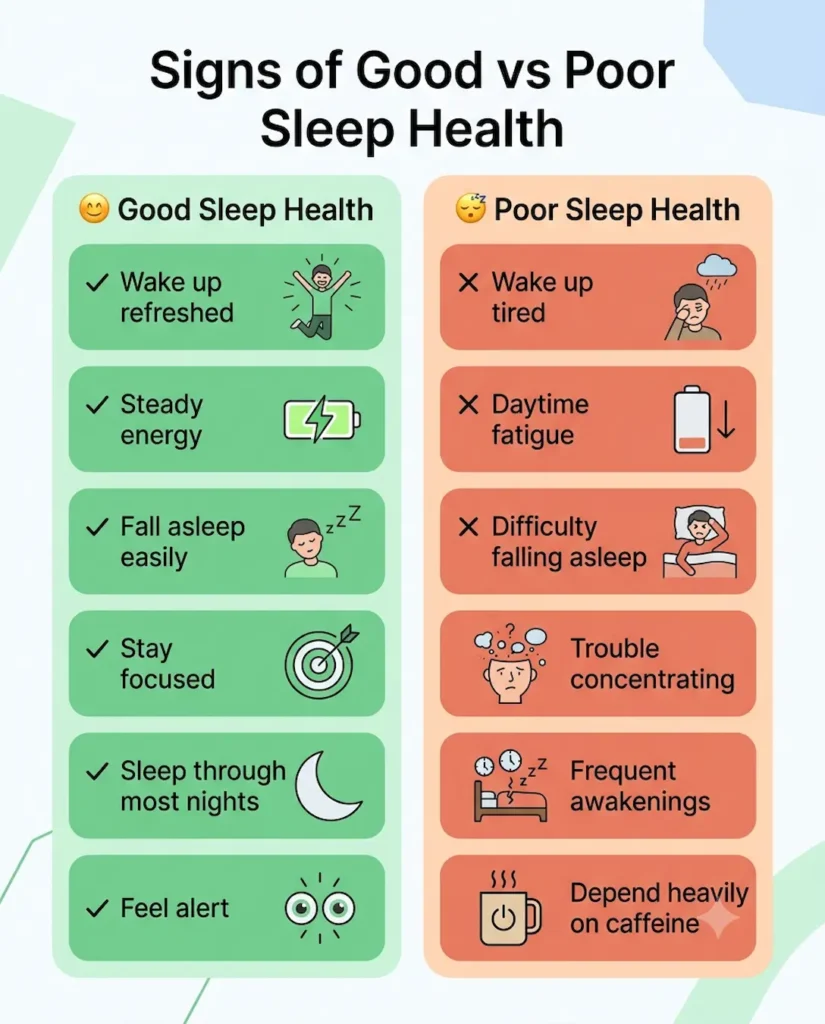
If several signs from the right column sound familiar, your sleep quality may need attention. Fortunately, improving sleep habits and sleep hygiene can often support better rest over time.
If you’re interested in measuring your sleep quality more systematically, a sleep quality assessment tool (PSQI) can provide additional insights into your sleep patterns.
Common Causes of Sleep Problems
Although sleep challenges can feel frustrating, they are often linked to everyday habits and routines. Fortunately, understanding these factors can help you identify areas where simple changes may improve your sleep.
1: Stress and Mental Overload
Stress is one of the most common causes of sleep problems.
When your mind stays busy long after your head hits the pillow, falling asleep becomes more difficult. Racing thoughts, worries about work, family responsibilities, or upcoming events can all make it harder to relax.
2: Technology and Screen Use
Phones, tablets, televisions, and laptops are part of modern life. However, excessive screen use close to bedtime may make it harder to unwind.
Many people find themselves scrolling through social media or watching videos much later than planned, which can delay bedtime and affect sleep routines.
3: Caffeine Consumption
Coffee, tea, energy drinks, and some soft drinks contain caffeine, which may remain in your system for several hours.
While caffeine can help boost alertness during the day, consuming it too late may make it harder to fall asleep at night.
4: Irregular Sleep Schedules
Going to bed at 10 p.m. one night and 1 a.m. the next can confuse your body’s natural sleep-wake cycle.
An inconsistent schedule often makes it more difficult to fall asleep and wake up at predictable times.
5: Lack of Physical Activity
Regular movement helps support overall health and may contribute to better sleep.
On the other hand, spending most of the day inactive can sometimes leave your body feeling less prepared for restful sleep.
6: Your Sleep Environment
Even small environmental factors can affect sleep.
Common examples include:
- Excessive noise
- Bright lights
- An uncomfortable mattress or pillow
- A room that feels too warm or too cold
Many people focus on sleep habits while overlooking the importance of their sleep environment.
In some cases, snoring and sleep quality may be closely connected, especially when sleep is frequently interrupted during the night.
This article is for educational purposes only and is not a substitute for professional medical advice. Recommendations in this guide are based on widely accepted sleep hygiene practices and guidance from trusted health organizations and sleep experts.
Healthy Sleep Habits and Sleep Hygiene
Many people think better sleep requires a major lifestyle change. In reality, small daily actions often have the biggest impact over time.
This is where healthy sleep habits and sleep hygiene become important. Simply put, sleep hygiene refers to the daily habits and bedroom environment that support better sleep. When these two elements work together, getting quality rest becomes much easier.
Healthy Sleep Habits That Support Better Rest
The following habits can help support healthier sleep and more consistent rest.
1. Keep a Consistent Sleep Schedule
Try to go to bed and wake up at similar times every day, including weekends when possible. As a result, your body’s internal clock can function more effectively.
2. Stay Physically Active During the Day
Regular movement can help your body feel naturally ready for rest at night. In addition, physical activity supports overall health and well-being.
3. Limit Caffeine in the Evening
While caffeine can boost alertness during the day, consuming it later in the evening may interfere with sleep.
4. Reduce Screen Time Before Bed
Many bedtime routines involve checking emails, scrolling social media, or watching videos.
Instead, try creating some distance from screens before bedtime and replace them with relaxing activities.
5. Create a Calming Bedtime Routine
A simple wind-down routine can help signal to your body that it is time to rest.
Examples include:
- Reading a book
- Listening to calming music
- Taking a warm shower
- Practicing gentle breathing exercises
6. Get Natural Daylight Exposure
Natural light plays an important role in regulating your body’s sleep-wake cycle.
Spending time outdoors during the day may help reinforce healthy sleep patterns.
7. Create a Sleep-Friendly Environment
Your bedroom should support rest whenever possible.
Consider:
- Keeping the room dark
- Reducing noise
- Maintaining a comfortable temperature
- Choosing supportive bedding
If you’re looking for a simple way to remember these habits, use the checklist below as a quick reference.
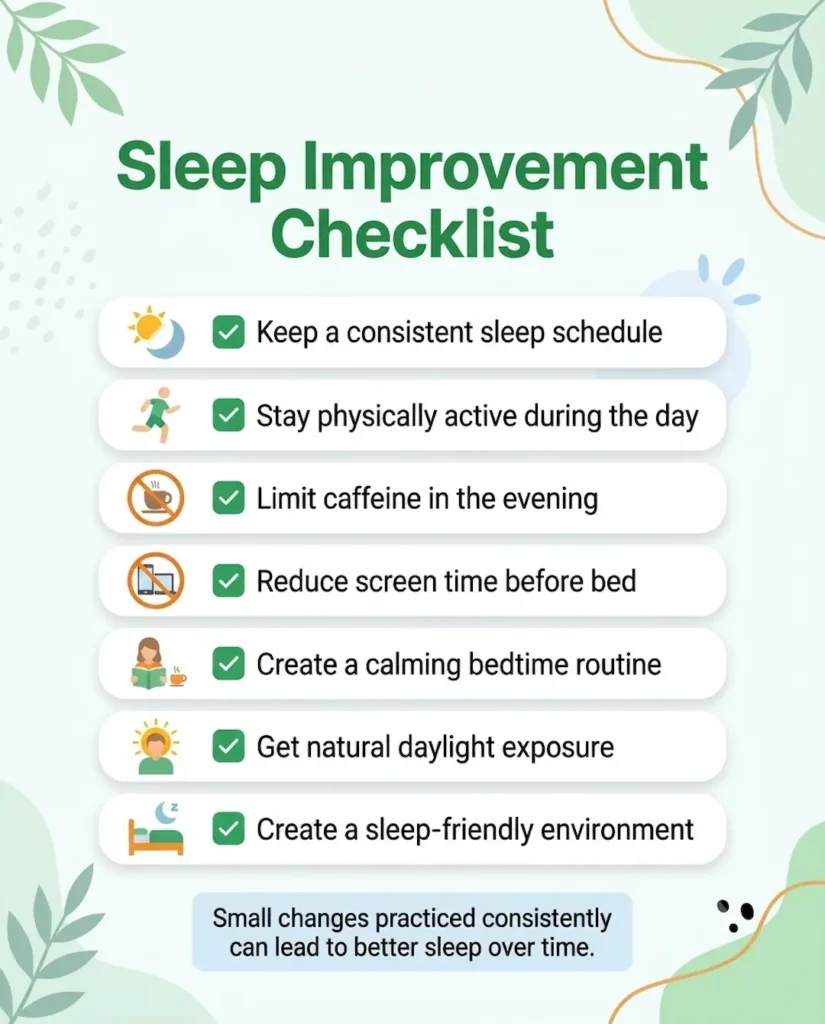
While the sleep habits discussed above can benefit people of all ages, children also need consistent routines to support healthy development. If you’re a parent, you may find our guide on Healthy Sleep Habits for a Happy Child helpful for creating sleep-friendly routines at home.
✔ Quick Tip
Sleep hygiene works best when changes are consistent rather than perfect. Missing a healthy habit occasionally is normal. What matters most is building routines that you can maintain over time.
How to Sleep Better at Night Naturally
Many people search for ways to sleep better at night naturally because they want simple solutions they can start using right away. Fortunately, improving sleep does not always require major changes. Often, small adjustments can make a meaningful difference over time.
What to Do When You Struggle to Fall Asleep
Most people experience occasional difficulty falling asleep.
When this happens, try focusing on relaxation rather than forcing sleep.
Helpful approaches include:
- Slow, deep breathing
- Reading a physical book
- Gentle stretching
- Listening to calming audio
- Practicing mindfulness exercises
One habit worth avoiding is constantly checking the clock.
Watching the minutes pass can increase frustration and make it even harder to relax.
Instead, focus on creating a calm environment and allowing your body time to settle naturally.
Small Daily Changes That Can Improve Sleep Over Time
Improving sleep usually isn’t about a single dramatic change.
Instead, it often comes from several small adjustments that work together.
For example:
- Moving bedtime 15 minutes earlier each week
- Reducing caffeine gradually
- Improving bedroom comfort
- Following a consistent wake-up time
- Tracking sleep patterns in a journal
Think of sleep improvement as a long-term investment. Small improvements practiced consistently often produce better results than drastic changes that are difficult to maintain.
When to Seek Professional Help for Sleep Concerns
Most sleep challenges can be improved through healthy habits and lifestyle adjustments. However, some situations may benefit from professional guidance.
Consider seeking support if:
- Sleep difficulties continue for an extended period
- Daytime fatigue regularly affects daily life
- Sleep concerns interfere with work, school, or relationships
- You frequently wake up feeling unrested despite spending enough time in bed
A qualified healthcare professional can help evaluate your concerns and recommend appropriate next steps.
Remember, seeking help is not a sign of failure. It is simply another step toward improving your overall well-being.
Frequently Asked Questions
What is sleep health, and why is it important?
Sleep health refers to the quality, duration, consistency, and effectiveness of your sleep. Good sleep health supports energy levels, focus, mood, daily functioning, and overall wellness.
How can I naturally improve my sleep health?
You can improve sleep health naturally by maintaining a consistent schedule, staying active during the day, reducing evening screen time, limiting late caffeine intake, and creating a comfortable environment.
What are the most common causes of sleep problems?
Common causes include stress, racing thoughts, excessive screen time, irregular sleep schedules, caffeine consumption, lack of physical activity, and environmental factors such as noise or light.
What is sleep hygiene, and how does it help?
Sleep hygiene refers to the habits and environmental conditions that support healthy sleep. Good sleep hygiene helps create routines and surroundings that make quality sleep more likely.
How do I know if my sleep quality is poor?
Signs of poor sleep quality may include daytime fatigue, difficulty concentrating, frequent nighttime awakenings, trouble falling asleep, and waking up feeling unrefreshed.
Conclusion
Good sleep health is not about achieving perfect sleep every night. Instead, it is about building realistic habits that help you get better rest more consistently.
The encouraging news is that even small changes can make a difference. For example, a more consistent bedtime, a calmer evening routine, or a better sleep environment may gradually improve your sleep quality.
Remember, lasting results often come from simple actions repeated consistently. Therefore, start with one or two sleep-friendly changes this week and build from there.
After all, what is one small step you can take tonight to support better sleep tomorrow?