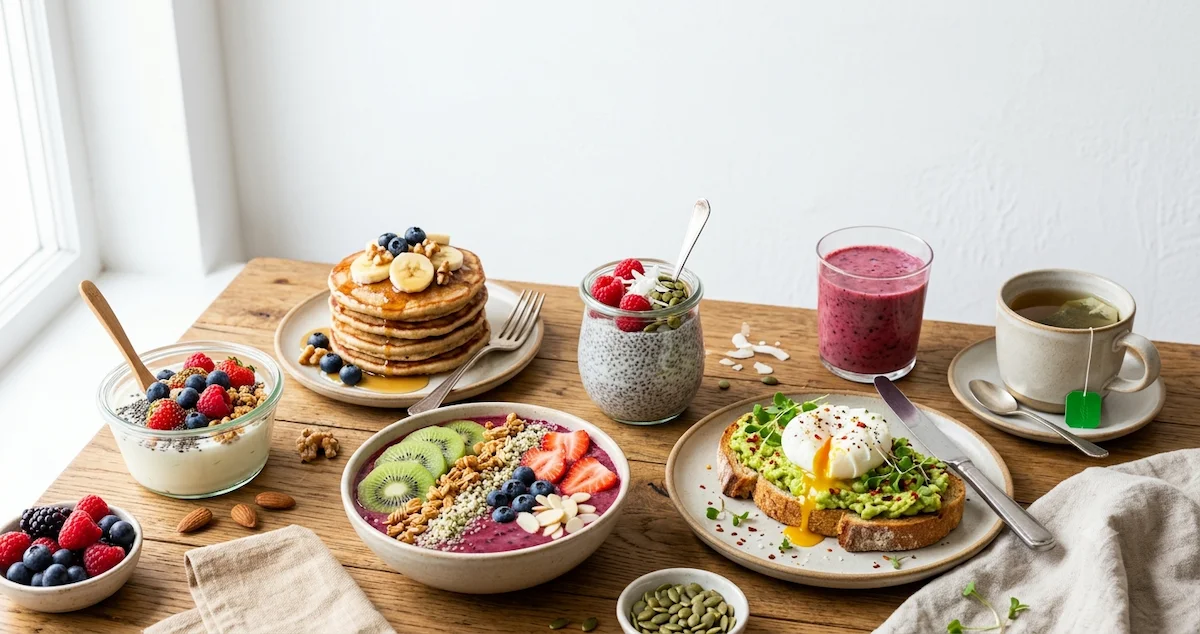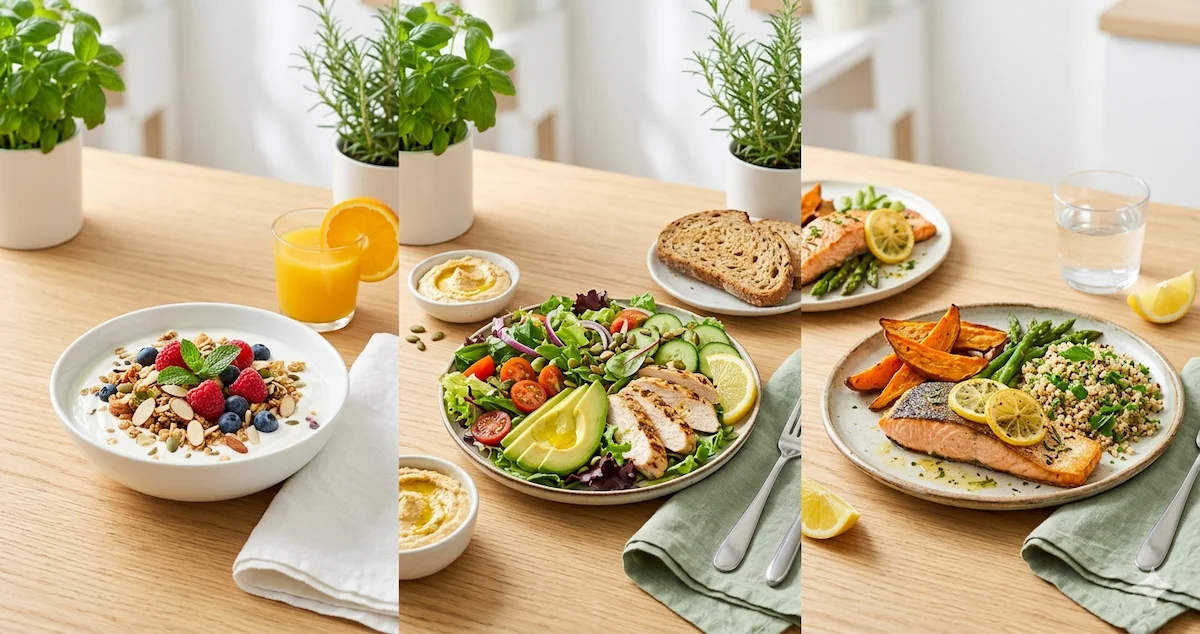
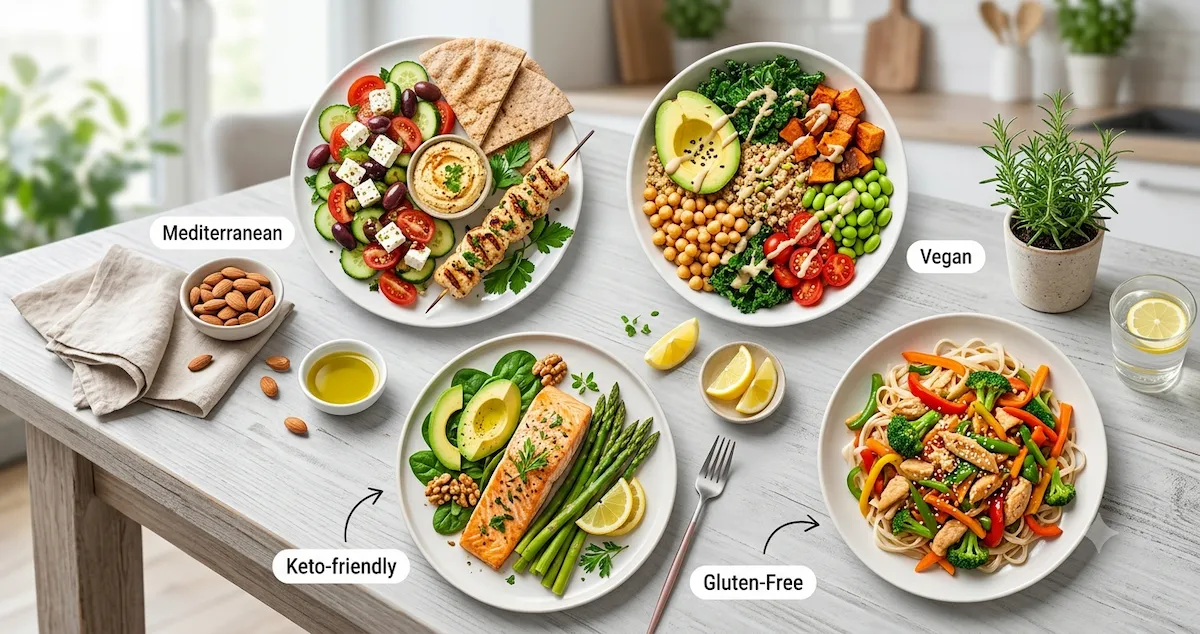
This special diets guide will help you understand different eating plans, why people choose them, and how to find one that fits your lifestyle. If you’ve ever wondered what special diets are and whether one might work for you, you’re in the right place.
These days, more people are looking for personalized ways to eat. Instead of following one-size-fits-all advice, they want eating plans that fit their goals, food preferences, and daily routines.
From gluten-free and dairy-free eating to vegan, keto, and Mediterranean diets, there are many options available. However, with so many options available, it can be difficult to know which approach actually fits your lifestyle. That’s exactly where this guide can help.
In this guide, we’ll break everything down in simple language. You’ll learn about common special diets, their potential benefits, practical meal-planning tips, and how to choose an approach you can actually stick with long term.
What Are Special Diets?
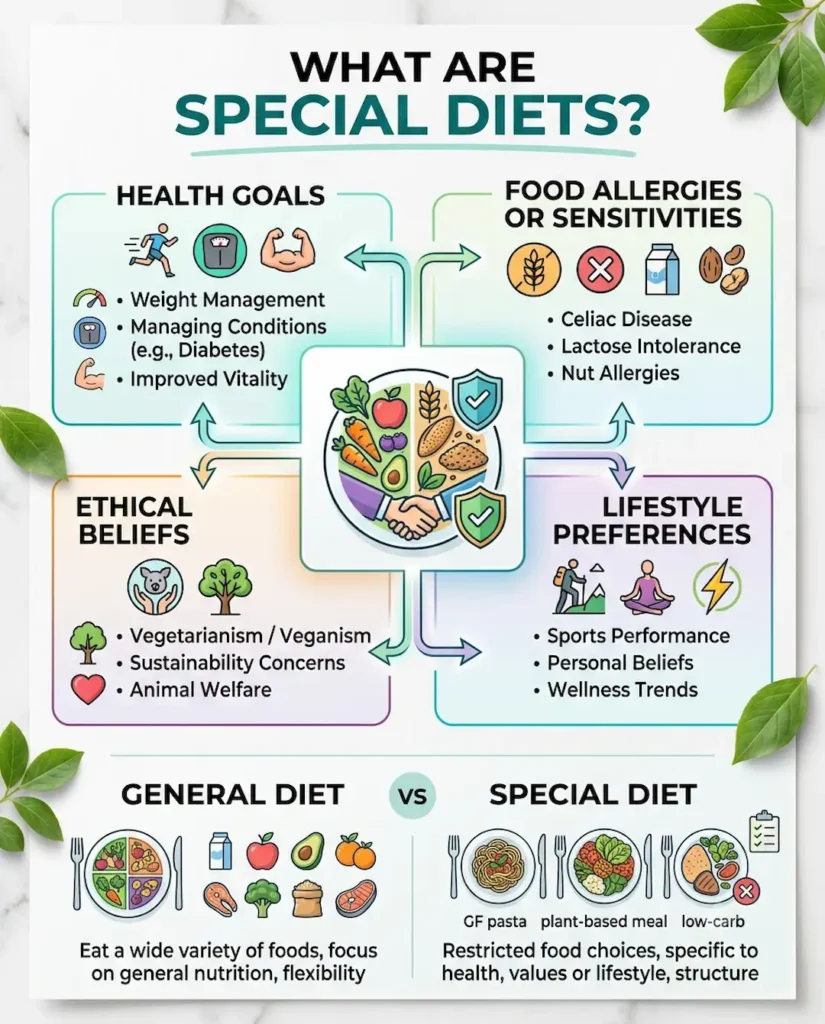
Let’s start with the basics.
What are special diets? They are eating patterns designed around specific goals, preferences, or restrictions. Unlike a general eating pattern, special diets follow clear guidelines about what to include, limit, or avoid.
People choose special diets for many different reasons, including:
- Personal wellness goals
- Food sensitivities or preferences
- Cultural traditions
- Ethical beliefs
- Environmental concerns
- Lifestyle choices
For instance, someone may choose a gluten-free diet to avoid foods containing gluten. Another person may follow a vegan diet because they prefer plant-based eating.
A sustainable eating plan is usually more effective than a restrictive one that feels hard to maintain.
If you’re curious about how nutrition patterns are studied globally, you can explore more research from Harvard T.H. Chan School of Public Health.
Good to Know
There is no single diet that works for everyone. The best eating plan is usually the one that matches your lifestyle, food preferences, budget, and long-term goals. A diet doesn’t need to be perfect to be effective. In many cases, consistency matters more than strict rules.
Types of Special Diets and Their Purposes
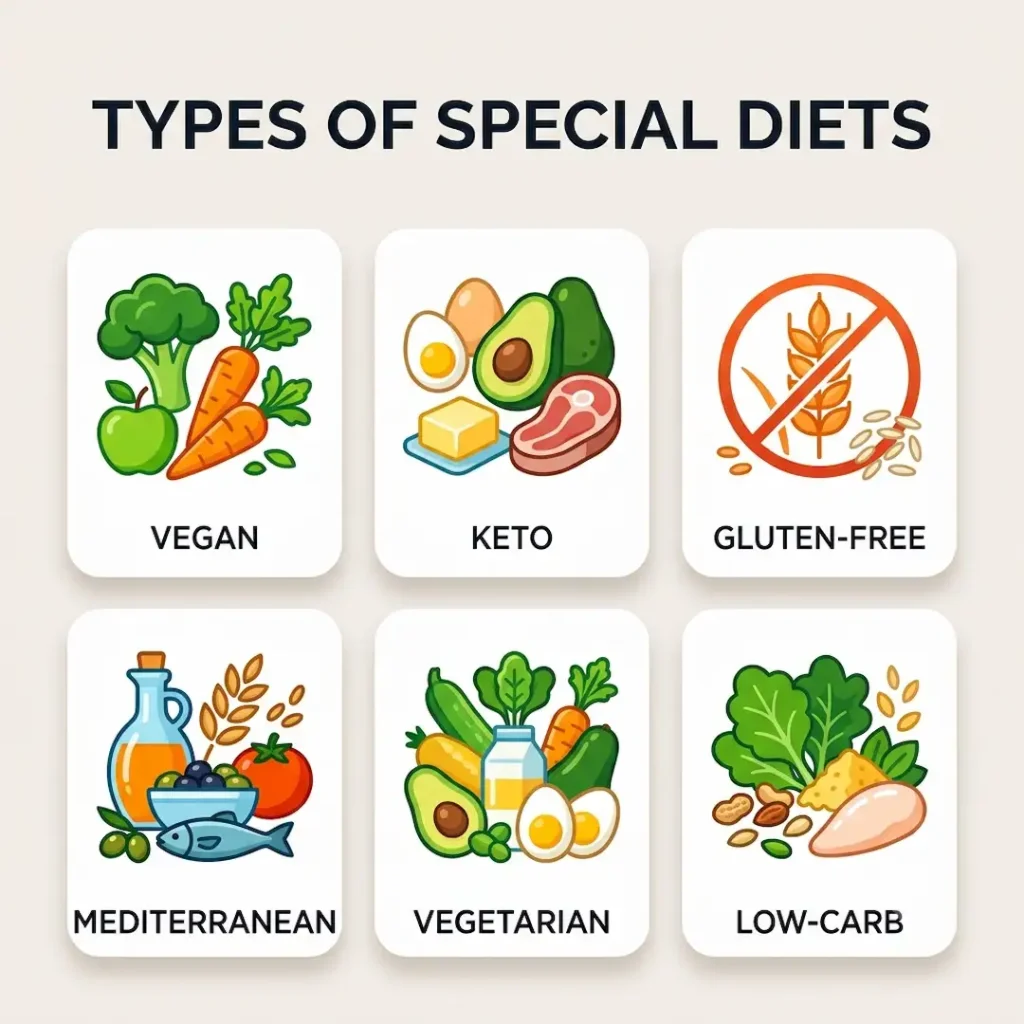
Now that you understand what special diets are, let’s explore the most common types of special diets people follow today.
While each diet has its own purposes, they all share one goal: helping people eat in ways that align with their needs and preferences.
Gluten-Free Diet
A gluten-free diet avoids gluten, a protein found in wheat, barley, and rye.
A gluten-free eating plan often includes foods such as:
- Fruits
- Vegetables
- Rice
- Quinoa
- Eggs
- Lean proteins
On the other hand, foods commonly avoided include:
- Traditional bread
- Regular pasta
- Many baked goods
- Some processed foods
If you’re also wondering how gluten-free eating fits into weight goals, read this:
Is a Gluten-Free Diet Low-Carb? 5 Facts You Should Know
For example, instead of a wheat sandwich, someone following a gluten-free diet might choose a rice bowl with grilled chicken and vegetables.
Dairy-Free Diet
A dairy-free diet removes milk-based products from daily eating.
Likewise, a dairy-free diet focuses on removing foods made from milk while still providing plenty of tasty alternatives such as:
- Almond milk
- Oat milk
- Coconut yogurt
- Plant-based cheeses
For example, breakfast made with oat milk can easily replace traditional milk-based options.
Vegetarian and Vegan Diets
Although these diets are often grouped, there are important differences between them.
A vegetarian diet avoids meat but may include dairy or eggs, while a vegan diet avoids all animal products.
Common plant-based foods include:
- Beans
- Lentils
- Chickpeas
- Nuts
- Seeds
- Whole grains
- Fruits
- Vegetables
For example, a vegan lunch might include quinoa salad with chickpeas, avocado, and fresh vegetables.
Low-Carb and Keto Diets
These diets reduce carbohydrate intake, but they differ in intensity.
Low-carb diets limit foods like:
- White bread
- Sugary snacks
- Sweetened drinks
Instead, people often eat:
- Lean proteins
- Vegetables
- Healthy fats
- Nuts and seeds
For people exploring fat-loss approaches, structured meal planning can help. A practical example is this: 7 Day Gluten-Free Weight Loss Diet That Actually Works
However, because eating preferences vary, some people find low-carb approaches easier to maintain than stricter keto diets.
Mediterranean Diet
The Mediterranean diet is one of the most balanced and popular eating styles worldwide.
It includes:
- Vegetables
- Fruits
- Whole grains
- Olive oil
- Fish
- Legumes
- Nuts
In fact, many people prefer this eating style because it feels flexible, balanced, and enjoyable rather than restrictive.
For example, a simple dinner may include grilled fish, roasted vegetables, olive oil, and a fresh salad.
To learn more about this eating pattern, you can check this trusted overview from the Mayo Clinic.
Other Special Diets
There are also other eating approaches that many people follow.
Paleo Diet: Focuses on whole, minimally processed foods like fruits, vegetables, meat, and nuts.
Plant-Based Diet: Focuses mainly on plant foods but allows flexibility depending on preference.
Low-Sodium Diet: Reduce foods high in salt.
Flexitarian Diet: Mostly plant-based but occasionally includes meat or fish.
Quick Comparison Table of Special Diets
To make it easier to understand different eating patterns, here is a quick comparison of the most common special diets and their main focus.
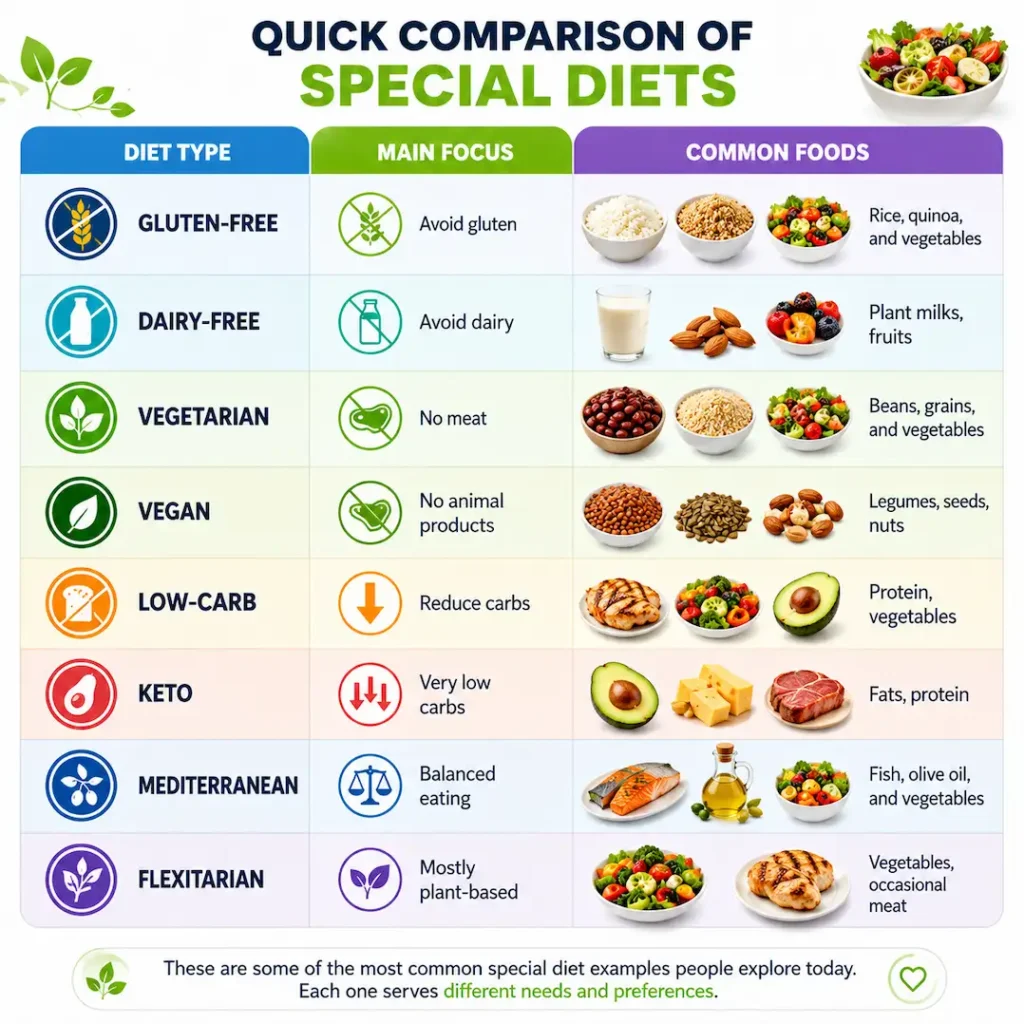
This comparison helps you quickly see how each diet differs in purpose and food choices.
Benefits of Special Diets
The benefits of special diets go beyond just changing what you eat.
In many cases, they also change how you think about food, shopping, and daily habits.
For example, many people notice positive changes when they start following a structured eating plan.
Some common benefits include:
- More home-cooked meals
- Greater intake of whole foods
- Better meal planning habits
- More mindful grocery shopping
- Improved awareness of food choices
Another major benefit is flexibility. Since there are many options, people can usually find a diet that suits their lifestyle instead of forcing something that feels uncomfortable.
For instance, someone who enjoys plant-based foods may naturally choose a vegetarian diet. Meanwhile, someone who reduces processed foods may prefer a low-carb approach.
In addition, many people experience less decision fatigue because they already know what fits their plan.
Keep in Mind
However, results always vary from person to person. No special diet guarantees results. Instead, consistency and overall lifestyle habits matter most. Therefore, it’s better to focus on progress, not perfection.
How to Choose the Right Diet for Your Needs
With so many eating styles available, choosing one can feel overwhelming at first.
However, you don’t need the perfect or most popular diet. Instead, you need the one that fits your real life.
If you’re wondering how to choose the right diet, start here:
Define Your Main Goal
First, think about what you want.
For example:
- Managing weight
- Eating more plant-based foods
- Avoiding certain ingredients
- Improving general eating habits
- Eating more simply and consistently
Knowing your goal helps narrow your options quickly.
Consider Your Food Preferences
A diet should feel realistic, not stressful.
For example, if you enjoy fruits, vegetables, and grains, vegetarian or Mediterranean eating may feel natural.
However, if you love bread and fruit, very low-carb eating may feel difficult in the long term.
Think About Your Lifestyle and Schedule
Your eating plan should fit your daily routine.
For example, busy people may prefer simple meals, while others may enjoy cooking more detailed recipes.
Therefore, the easier it is to follow, the better your chances of success.
Evaluate Affordability
Healthy eating should also fit your budget.
Before choosing a diet, consider:
- Grocery costs
- Ingredient availability
- Cooking time
- Long-term affordability
Focus on Long-Term Sustainability
Many diets work for a short time.
However, the real question is: can you follow it for months or years?
Instead of chasing perfection, choose something you enjoy and can maintain comfortably.
Quick Comparison Table
| Goal | Diet Options to Explore |
| Weight management | Low-carb, Mediterranean |
| Plant-focused eating | Vegan, Vegetarian |
| Food sensitivities | Gluten-free, Dairy-free |
| Flexible healthy eating | Mediterranean, Flexitarian |
A simple rule helps here:
Choose the diet that improves your habits without making life harder.
Special Diet Meal Planning Tips for Success
Starting a diet is easy. Sticking to it is where most people struggle.
That’s why special diet meal planning tips can make a big difference.
Build Meals Around Whole Foods
Focus on foods that are close to their natural form.
For example:
- Fruits
- Vegetables
- Beans
- Lentils
- Whole grains
- Nuts
- Lean proteins
As a result, meals feel more filling and balanced.
Plan Your Weekly Menu
At the start of the week, plan your meals.
This helps you:
- Save time
- Reduce stress
- Avoid unhealthy last-minute choices
Therefore, even 20–30 minutes of planning can make your week easier.
Read Food Labels Carefully
Although labels can feel confusing at first, they become easier over time.
Check for:
- Ingredients
- Added sugar
- Sodium
- Allergens
Prepare Healthy Snacks in Advance
Meanwhile, having snacks ready prevents unhealthy impulse eating.
Examples include:
- Nuts
- Fruits
- Cut vegetables
- Hummus
Stay Flexible and Consistent
One meal won’t ruin your progress.
Instead, focus on consistency over time.
Remember:
Progress matters more than perfection.
Healthy Eating Tips That Work for Almost Any Diet
No matter which diet you follow, some habits always help.
Prioritize Nutrient-Dense Foods
Try to include:
- Vegetables
- Fruits
- Whole grains
- Lean proteins
- Healthy fats
Stay Hydrated
In addition, drinking enough water supports energy and helps reduce unnecessary snacking.
Include Fruits and Vegetables Daily
Not only do they add color, but they also improve balance in meals.
Limit Highly Processed Foods
Try to base most meals on whole foods rather than packaged items.
Practice Mindful Eating
Nowadays, many people eat while distracted.
As a result, they often miss hunger signals. Try slowing down and enjoying your meals.
Focus on Balance, Not Perfection
Healthy eating is about long-term habits, not perfect meals.
Therefore, aim for consistency instead of strict rules.
Frequently Asked Questions
What are special diets?
Special diets are eating plans designed around specific health, lifestyle, or personal needs.
What are the most common types of special diets?
Common examples include gluten-free, vegan, vegetarian, keto, low-carb, Mediterranean, and flexitarian diets.
How do I choose the right diet?
Focus on your goals, preferences, lifestyle, and budget. Choose something realistic and sustainable.
Can special diets improve eating habits?
Yes, many people become more mindful of their food choices when following structured eating plans.
What should I consider before starting?
Think about your goals, food preferences, time, budget, and long-term consistency.
Conclusion
Finding the right eating plan doesn’t have to be complicated.
As this Special Diets Guide shows, there are many flexible ways to improve your eating habits, whether you choose gluten-free, vegan, Mediterranean, or a simple, balanced approach.
However, the most important factor is not the diet itself, but whether you can stick to it in the long run.
Understanding how to choose the right diet can make everything easier and more sustainable.
So, instead of chasing trends, start with small changes that fit your lifestyle—and build from there.
If you’re exploring gluten-free eating in more depth, especially desserts and treats, you might also like Desserts for a Gluten-Free Diet: 15 Easy Sweet Treats.
This article is for educational purposes only. Everyone’s nutritional needs are different, and personalized guidance may be helpful before making major dietary changes.